© Osengwa LLC. 2021 All Rights Reserved.
Prince Uhunoma Charles’ story signifies the intellectual boldness required to unify the “abstractions of the universe” with the tangible reality of artistic creation, a journey that began when he converted a Mass Communication degree into a “four-year residency” of cross-disciplinary experimentation at the University of Benin. His practice is defined by a rigorous inquiry into the intersection of science, art, and spirituality, best exemplified by his ongoing project Quantum Desires and the Presence of Water, Where Butterflies Come to Rest, which uses performance and installation to interrogate the physics of consciousness and neurobiology. Anchored by a philosophy of “maximum expression from minimum resources,” he navigates the “creative tension” between his identity as a poet and his research-driven visual art, using his work to dismantle patriarchal structures and societal subjugation he witnessed firsthand. Ultimately, Uhunoma’s narrative is a call to radical honesty, urging artists to reject the pressure of commercial consistency in favor of telling the vulnerable stories that truly connect us to our shared humanity.
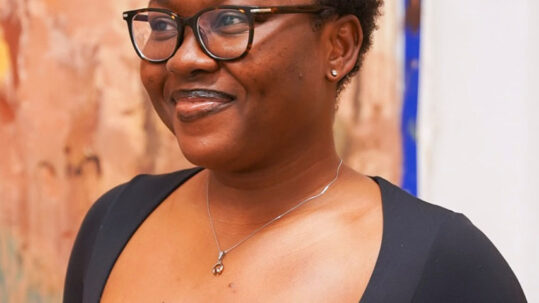
Prince Uhunoma Charles
In our opening feature, we explored the world of Jonathan Chambalin, whose creative path was forged in the communal, disciplined environment of Theatre Arts, and while Jonathan builds outward, today, we sit with Prince Uhunoma Charles, who invites us to look inward.
Uhunoma’s practice is a radical departure into the abstract. Bridging the gap between science and spirituality, he invites us to question the very fabric of our existence, from the violence of patriarchy to the physics of water. Together, their stories reveal the diverse creative energy emerging from the same ecosystem.
Here, I spoke with Prince Uhunoma Charles about his path as an artist.
Background & Education
1. Question: What year did you graduate from the University of Benin and what motivated you to choose the University of Benin for your studies?
Answer: I graduated in 2018. My decision to pick the University of Benin was actually a funny one because I was really interested in the arts, but I wasn’t bold enough to tell my parents that I wanted to study art or theatre arts. I had always been performing and writing poetry, so I wanted something in that direction, but I didn’t know how to go about it.
While searching, I came across the University of Benin. I’m also from Edo State, Benin, so it felt familiar.
When I looked up the courses I could apply for, I saw Mass Communication, which was in the same department as Theatre Arts. It sounded interesting. I figured I might get to offer courses in both areas, and it was easier to explain to my parents. My Mum accepted it.
When I got to school, I realized that since I had chosen Mass Communication, I had to focus on that. I only had the opportunity to take about one Theatre Arts course as an elective. But because the campus was quite small and we had the Mass Communication, Theatre Arts, and Fine & Applied Arts Departments, it was a very creative environment. You mixed with artists from different disciplines.
Everyone was creating. You weren’t just stuck in your department; you absorbed the energy of the fine artists and other creatives around you.
It was a small, intimate space. Some of us were even roommates. It felt like four years of residency with artists from different fields. I think that sharpened my skill for other art forms because, before school, I was mostly doing poetry. Being in that space pushed me to explore different forms and build on them.
UNIBEN Experience & Influence
2. Question: During your time at UNIBEN, were there any specific experiences, professors, or mentors that shaped your creativity or perspective? Also, are there any classmates you studied with who you still collaborate with or who have influenced your work?
Answer: In school, things were very interesting. A lot of people knew me, probably because I wasn’t the typical Mass Communication student. Every time there was an event in the Ekenhuan Campus, there would be a Blast Event or some sort of activation, rap battles, performances, all of that, and it was happening constantly. It was a new space for me. As a poet who had already joined the Creative Writers’ Club, I began taking poetry out of reading rooms and onto stages.
I found myself collaborating with musicians, blending poetry and music. At some point, I even joined a music group, and they pushed me into rap because my delivery leaned in that direction. I kept exploring different things until photography came along.
I started hanging out with Jonathan (Jonathan Chambalin), he was on my block, and there was Bami (Ayobami Ogungbe), who was already deep into photography in his final year. These were the top photographers on campus. I had always been interested in photography. Growing up, we had a camera at home and used it to document a lot, so I was already familiar with handling one. But I wanted to understand what using a digital camera felt like. Hanging around them, assisting with shoots, helping with lighting, and watching their process gave me a proper understanding of how they made images.
Eventually, I started doing my own photography too.After they graduated, we still had other photographers like Racheal Seidu doing amazing work. There was also Benjamin, now in Abuja. It was a strong, vibrant line of photographers, and we always shared ideas, reviewing and critiquing each other’s work, and had those long creative conversations. These guys really inspired me to take photography seriously. And then there were artists like George and others in Fine Arts, all doing their own thing. The whole environment was intimate, small enough that we were constantly interacting and learning from each other.
Looking back, what really shaped me as an artist was those cross-disciplinary interactions. Jonathan was in Theatre Arts but also doing photography; others were mixing performance, visual art, writing, everything. Being around that kind of creativity meant you were always picking up something: sometimes consciously, sometimes subconsciously.
All of that made me realize I didn’t have to stay in one box. I could explore beyond what I started with. And that’s really how school shaped me into the kind of artist I am today.
In addition to all of this, I also had one particular experience that wasn’t so pleasant at all. Something happened to a friend of mine, and she asked me to accompany her to the place where it happened. It was a situation rooted in extended family dynamics, and that was the first time I experienced patriarchy so clearly and so violently. I remember standing there thinking“What on earth is going on?” The level of subjugation, among men and women, and even among the women themselves, was shocking. Seeing it play out in real time made me start questioning society deeply, especially what exactly shapes Benin as a cultural and historical space. We’re always told it was a warrior kingdom before the colonial looting and repression, but I began wondering: “Did that history translate into the behaviors of men today? Has it always been like this? What parts of our past are still informing how people act now?”
Being present in that moment was overwhelming. It pushed me to think beyond my own perspective and interrogate the structures people live under: the social, cultural, and historical forces that shape how we behave. That experience really influenced how I understand life, community, and identity, far beyond anything I was learning in class.
3. Question: Are there specific traditions or aspects of Benin’s culture and artistry that have shaped your perspective or work?
Answer: Yeah, I’m really thinking about this, because I think it’s the first time I’m actually reflecting on it. In a way, I never really explored much of Benin culture or spirituality, at least not as deeply as I would have wanted to when I still had the opportunity. Back then, all I thought about was school. I wasn’t thinking seriously as an artist yet. Looking back now, I would say yes, Benin did influence me but in a very subtle way. Benin is a deeply cultural place, but you don’t always see it on the surface. It shows up more in the everyday behaviour of the people, the way traditions have been quietly synthesized into daily life.
There’s this stubbornness in Benin: this attitude of just do it, regardless of what anyone has to say. People will talk, they’ll criticize, but they also still do whatever they want. You can’t show weakness. You just have to make your decision and stand by it. I think that rubbed off on me: the boldness to explore ideas through different mediums, the refusal to let myself be boxed into one thing.
Now that I’m out of school and doing more research around the culture, things aren’t so difficult for meto comprehend. I already had some exposure to that synthesized form of tradition, so there’s a kind of intuitive understanding I’m building on.
So yes, if the question is about any specific thing or influence, I’d say it’s that: the culture’s quiet but persistent presence, and the way it shaped how I move, create, and make decisions.
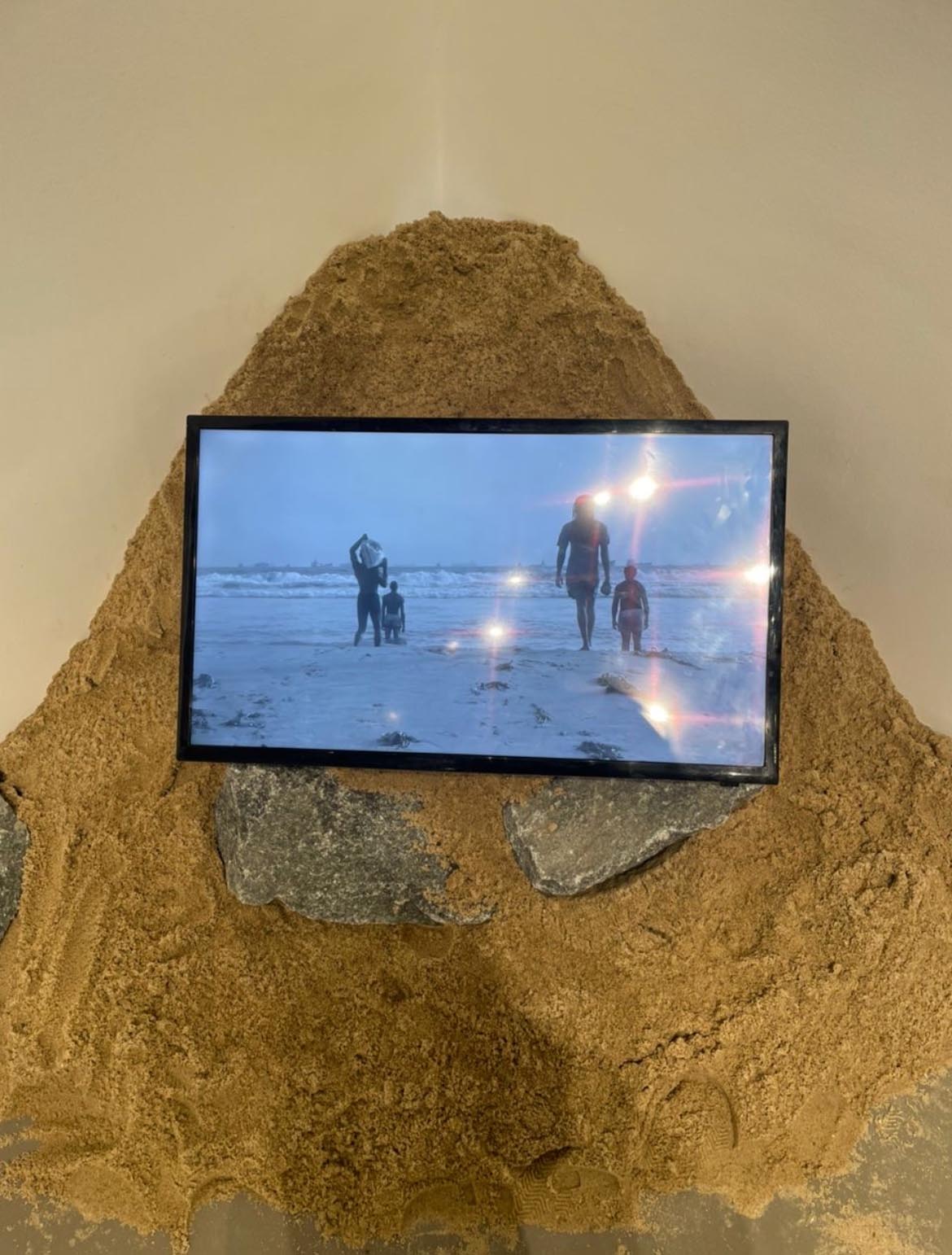
Prince Uhunoma Charles’ Artwork (Image Courtesy of Prince Uhunoma Charles)
Creative Journey & Development
4. Question: What were some of the biggest challenges you faced early on, and how did you navigate them?
Answer: I think one of the most personal questions for me has always been: “What do I really want to express?” Not just technically, not just because I’ve acquired certain skills, but at the core, as an artist, “what is it I’m trying to say?”
I was constantly asking myself how to transition from photographer to artist, or from poet to artist. “What am I actually expressing? How do I ground my ideas in time?” I didn’t want to do what everyone else was doing simply because it was the trend.
Even when I created something, I would question myself: “Is this truly yours? Is this what you want to be known for?”
There was a disconnect between who I was publicly as an artist and who I was alone in my room. I’ve always had interests outside the cultural or ecological lens; physics, how the world operates, the abstractions of the universe. Those ideas fascinated me. So I kept asking: “How do I translate these abstractions into art? How do I merge these inner curiosities with my practice? Is there anyone else thinking this way but not saying it out loud?”
That became part of my journey of finding myself.
Beyond that, the practical challenges were real. Like many artists, the financial struggle was a major thing from the start. I borrowed cameras in school to take pictures. Even after graduating, when I left my job at a PR firm because I no longer felt connected to it, I quit without a laptop, without a camera; everything I needed to work had broken or wasn’t available. I was broke. I was confused. I didn’t know where to begin.
But I went back to poetry. And from there, I started searching for the biggest possible ways to create using the smallest possible resources. I became obsessed with the question of the minimal: “How can I create maximum expression from the minimum resources around me?”
That led me to soft portraitures. It pushed me to refine my street photography. I was constantly negotiating between the desire to create and the scarcity around me. And in a strange way, the lack sharpened me. It forced me to think more intentionally, to stretch, to shape my ideas with whatever I had access to.
Those early challenges: the questioning, the scarcity, and the internal conflicts, shaped me deeply.
And they still do. My practice today is built on that foundation of maximizing what’s available and remaining honest about what I truly want to express.
5. Question: How did you find your first creative community or opportunities after school?
Answer: After school, I started working as a photographer. I was working at Modzero Photography Studio as a sports photographer for a while, which was a cool experience and helped me rekindle my interest in photography (this was before Modzero Photography Studio opened). But aside from that, I quit that job to work as a copywriter for a public relations firm. After about eight months, I realized Iwasn’t creating as much as I wanted to, so I quit.
After quitting, I was lucky to get invited to participate in a film festival in Germany, where I exhibited a short film I made. It was my first comprehensive, thematic short film, and the museum even acquired the work. That was a major opportunity for me after leaving my job in 2021. Around that time, I met Saul Williams, a poet I’ve always admired. I read one of my poems to him, and he posted it online. I had been questioning if I had made the right decision by quitting my job to become a full-time artist. But seeing so many people engage with my work was, for me, a confirmation from the universe that I could get where I dreamed of going. Meeting someone I admired from afar and having real conversations with him in Nigeria was huge.
That gave me the confidence to keep applying for opportunities. I kept applying, even though for almost a year I wasn’t sure if I was making progress. I survived mostly on small commissions and photographing events. Gradually, I started improving my applications and getting more opportunities to participate in festivals. I began seeing myself as a serious artist dedicated to my craft.
The big questions that keep me going is: “Why am I doing what I’m doing? What stories am I telling, and how valuable are they?” Despite all the challenges of being a full-time artist in this country, that curiosity keeps me moving forward.
So, basically, that’s how I started.
Work, Vision & Practice
6. Question: Can you tell me about your current practice and any ongoing projects you’re excited about?
Answer: Currently, as I mentioned earlier, I’m working on unifying the abstract side of myself: the part that often occupies my thoughts and sometimes conflicts with my identity as an artist. This creative tension has drawn me into exploring abstractions that we usually expect only science to answer. I’m investigating the intersection where science and art meet, using unconventional artistic methods of inquiry. For example, I use performance to explore consciousness. This process is fairly new for me. I started a project in 2023 called Quantum Desires and the Presence of Water, Where Butterflies Come to Rest. It’s ongoing and long-term. So far, it includes about five short experimental videos, three performances, and a photo series.
The research behind this project is deeply rooted in science, physics and neurobiology, but I’m using art as a way to interrogate consciousness, the fundamental fragment of society, and the very baseline of our existence. I’m interested in what artistic practices and methodologies can open up in terms of understanding and inquiry.
I’ve always believed in the unification of all ideas and mediums to properly comprehend the world. I don’t think science alone can complete this task. We need to unify science, art, and spirituality; bringing together every form of thought, idea, and worldview into the basic fabric of the universe. Because from this fundamental fragment, all ideas emerge. Every idea is valid within the realm of consciousness.
So, how do we use art to interrogate this? How do we synthesize these ideas into one cohesive body of knowledge and find new ways of thinking and understanding the world? In essence, I see myself contributing to a broader tapestry of possible solutions and perspectives.To answer the question, the project I’m most excited about is this current one: Quantum Desires and the Presence of Water, Where Butterflies Come to Rest. It represents the meeting point between who I am as an artist and who I am as a person. All my interests and ideas are contained within it. Through this project, I’m expanding my practice and exploring new mediums, including installation art and a fusion of installation with performance art. It’s also a way for me to interrogate and push the boundaries of these mediums.
I don’t see this project ending anytime soon; it feels like the umbrella under which my current practice and artistic trajectory fall. All other projects I’m working on are offshoots of this one, so it’s truly the heart of what I’m doing right now.
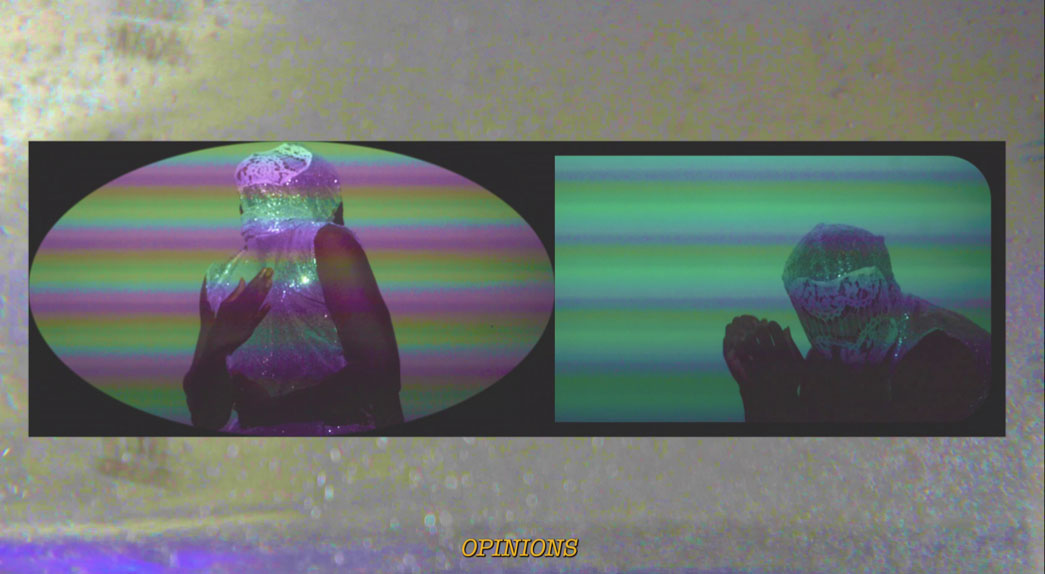
Prince Uhunoma Charles’ Artwork (Image Courtesy of Prince Uhunoma Charles)
Reflection & Advice
7. Question: As you’ve expressed, the University of Benin is a type of school that strengthens one’s courage, makes a person more assertive and more awake to shaping their path with a certain vim. Looking back, what role did UNIBEN play in your journey, and what advice would you give to current students who want to follow a similar creative path?
Answer: If I were to give advice to anyone, I’d first say this: everyone finds their own path, no matter what advice you give. It’s not really my duty to shape someone else’s future or tell them what to do, I’m just speaking from my own perspective.
From what I’ve understood about life and art, my biggest advice is to stay true to what you want to do, especially the stories you’re most scared to tell. It might sound cliché, but those stories, the ones that feel too personal or difficult to share, are often the ones that define you on a deep, subconscious level.
When you share those vulnerable and authentic parts of yourself, you connect with people on a deeper level. They see you, and in turn, they see themselves reflected in your work. Despite our different backgrounds, we all share fundamental elements as human beings and as parts of the universe. There are many points where our experiences overlap and resonate.
So, by being honest and true to those personal stories and ideas, you create work that anyone can connect to. My advice is simple: stay true to the stories that feel most real and important to you. When you do that, people will connect with your work naturally.
8. Question: How do you stay inspired and grounded as a creative professional?
Answer: I understand that as an artist, there are days when you feel incredibly creative: full of ideas and ready to take on the world. Then, there are days when you question everything: “What the hell am I doing? Are these stories even valid? Why should I be telling them?” That’s just part of the journey: the natural ups and downs.
Some days your creative cup is overflowing, and other days it feels empty. But it’s important to remember: the cup can’t stay full all the time. If it did, the water would get still and useless. You have to allow yourself to be empty sometimes, so you can be full again.
To stay creative, the key is to stay true to yourself and your experience. Don’t force stories or ideas that don’t feel right. One thing I try to avoid is getting caught up in the idea of consistency as simply producing work every day. To me, consistency means staying true to the creative process itself. And that process includes rest, downtime, and moments of solitude.
At least, that’s what I’ve learned as an artist working for the past five years. You need to honour those times without pressure. Not every idea or piece of work is meant to be shared: some are experiments, introductions to bigger ideas.
It’s important to keep creating in private spaces: your room, your studio, and stay curious. Inspiration can come from anywhere: plants, trees, conversations with people, everything around you. I focus on staying true to the stories I want to tell and who I am as a person. By being present and finding meaning in the moment, I create work that feels meaningful to me.
This is how I’ve been navigating my own creative journey. Everyone’s process is different, but this is mine, and this is how I find inspiration.
MOWAA Situation
9. Question: How did the recent events at MOWAA in Benin strike you: as an artist and as someone rooted in this cultural landscape?
Answer: The situation with MOWAA was truly shocking to me. I couldn’t believe what I was seeing on my phone, especially since I was preparing to travel the next day. Seeing all those videos coming from Benin was deeply unsettling.
I had hoped that the parties involved would understand the magnitude of the project at hand. I thought there would have been some form of dialogue, perhaps a behind-the-scenes solution or better communication between the stakeholders. Instead, what unfolded was really sad, and I can’t help but feel that things could have been handled much differently.
I was, and still am, shocked. I had hoped for a more sensitive approach from everyone involved: MOWAA, the government, and the community. Everything should have been thoroughly discussed and cleared before the opening took place.
I feel that this incident raises serious questions about investing in Benin City, especially in the arts and cultural sectors, which desperately need support.
With the steady decline of artisans and fewer opportunities for artists to thrive, MOWAA was a breath of fresh air, bringing new opportunities not just to the arts community, but also benefiting local tourism and the wider community.
Still, I remain hopeful that the damage can be repaired, that lessons will be learned, and that such an institution can thrive in Benin once again. Having MOWAA back in Benin would be truly amazing.
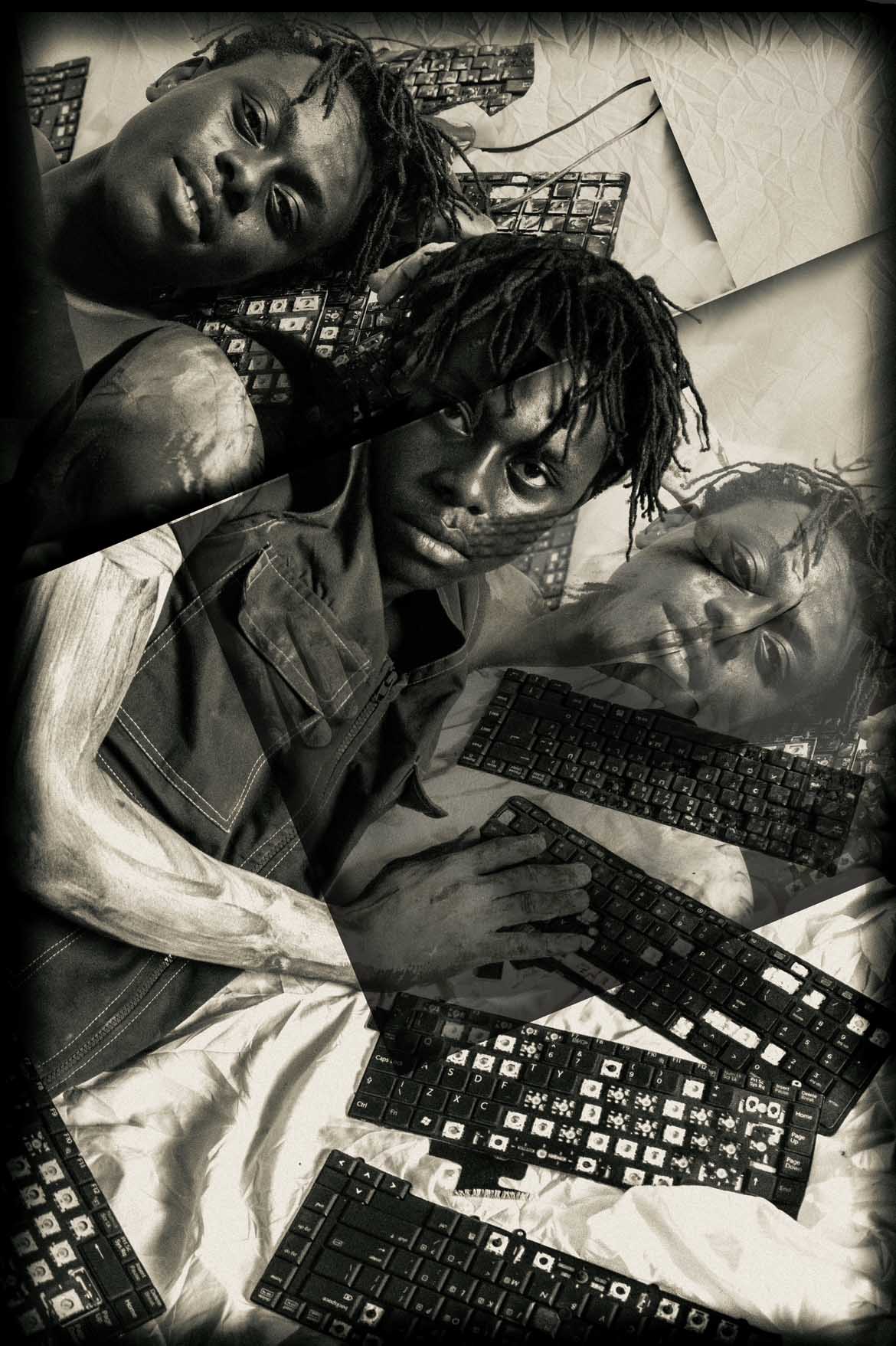
Prince Uhunoma Charles’ Artwork (Image Courtesy of Prince Uhunoma Charles)
Prince Uhunoma Charles has challenged us to confront the “fundamental fragments” of our existence through physics and performance. But where Uhunoma seeks to dismantle structures, our next artist seeks to build them through “radical care.”
Next >>
In the next part of our series, we transition from the intellectual laboratory to the communal studio to meet Chidinma Nnoli, a painter who is building not just a body of work, but a shelter for others. In this article, we ground ourselves in “radical care.” And from the experience of a shared studio in Benin to the halls of the School of the Art Institute of Chicago, she closes our series with a powerful meditation on interiority and the future of Nigerian art institutions.