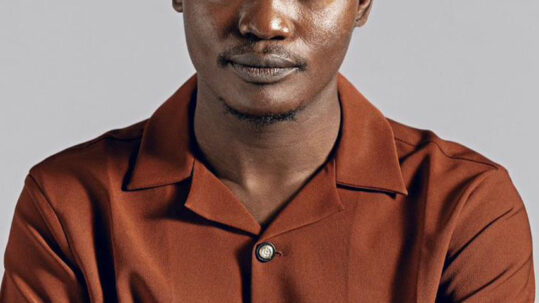
© Osengwa LLC. 2021 All Rights Reserved.
Chidinma Nnoli’s story is a powerful testament to the vital importance of community, tracing her journey from a bustling shared studio at the University of Benin to her current graduate studies in Chicago. Although she initially intended to study textile design, she pivoted to painting to discover a more “expansive way of making,” a decision that has defined her professional career for the past six years. Now, she is extending that sense of support to others through the Nchedo Arts Foundation, a non-profit she founded to offer “radical care” and residencies to emerging Nigerian artists. Here, Nnoli discusses the shifting nature of her practice, the grounding influence of art history, and her urgent call for institutions like MOWAA to provide meaningful access to local students.
Chidinma Nnoli
In our previous feature, Prince Uhunoma Charles took us through a deep interrogation of consciousness and the “abstractions of the universe.” While Uhunoma’s practice is a solitary interrogation of physics and consciousness, Chidinma Nnoli reminds us that these intellectual breakthroughs are best sustained within a community. Moving from the lively, bustling studios of Benin to finding her voice in Chicago, she explores how space, materiality, and collective support define the life of an artist.
In this interview, I converse with Chidinma Nnoli.
Background & Education
1. Question: What year did you graduate from the University of Benin and what motivated you to choose the University of Benin for your studies?
Answer: I graduated from UNIBEN in 2018. I decided to go to the University of Benin because it was one of the universities in the Nigerian art historical cities that I had learned about in my fine art classes in secondary school. When applying, I considered Zaria, Ife, Nsukka, and Benin and ultimately decided to go to Benin. It just felt like the right spot. It was this cultural hub with a lot of history, and it wasn’t too far away from Lagos.
2. Question: Can you tell me a bit about what you studied at the University of Benin and how that connected (or didn’t connect) to your creative path today?
Answer: I studied Fine and Applied Arts and majored in painting. I wanted to major in textile design because my amazing secondary school art teacher, Mr. Durosinmi, was a textile designer who inspired me a lot. But when I got to the University of Benin, I realized I wanted a more expansive way of making, and I couldn’t get textiles to do that in the way that painting did for me. I’ve been painting professionally for the past 6 years so I guess I made the right choice.
UNIBEN Experience & Influence
3. Question: During your time at the University of Benin, were there any specific experiences, professors, or mentors that shaped your creativity or perspective? Also, are there any classmates you studied with who you still collaborate with or who have influenced your work?
Answer: It was really about the community of artists we had there at the time. Just like many Nigerian art departments, I still think the curriculum is very much outdated and doesn’t reflect the ways artists should be thinking and making critical work that reflects these contemporary times. Regardless, we found a way to make it work.
Having a communal studio really shaped the experience, to be honest. It’s not a typical professional studio, but it really fostered a strong sense of community. We had a large hall with about 17 painters in the studio, and it was a lively space. We had our dorms and houses, but we basically lived there and cooked there, even though cooking wasn’t allowed. There was something magical about that space: the conversations, the energy, everyone painting side by side, loud music playing. That painting studio was the place to be, even for students who weren’t majoring in painting.
The community built in that studio was really special and helped shape us. Now, I think more spaces like that are needed. Having everyonetogether in that one studio was really impactful. It truly set the tone for community-building, which I think is invaluable in an artist’s practice.
Outside of the university walls, spaces like Nosona Studios (Edo Global) at Sakponba Road were accessible to artists, and critical conversations were happening there as well.
I also had my first exhibition in Benin at Fontini Cristi Art Gallery, which was organized by the five female students in my cohort. We planned this exhibition from scratch. We made the works while we were still in school, designed posters, and created a catalog—it was a whole project. We invited people from school, and the show was called There She Is.
4. Question: Looking back, how did your time at the University of Benin influence your personal and artistic growth?
Answer: Being an artist is harder than a lot of people realize. I’m really grateful for the cohort and community I had at the start of my practice. I was fortunate to be surrounded by a good mix of artists who were genuinely talented and passionate about making.
I met amazing people at UNIBEN, a lot of whom are still practicing today, and I’m still in conversation with Josh Egesi, Jonathan Chambalin, Michael Igwe, Rachel Seidu, Tofo Bardi, and Chijioke Anyacho. All doing amazing work.
My favorite professor, Mrs. Esther Esizimetor, is someone I still talk to to this day. It’s a long list, but all of these people have shaped me in many ways.
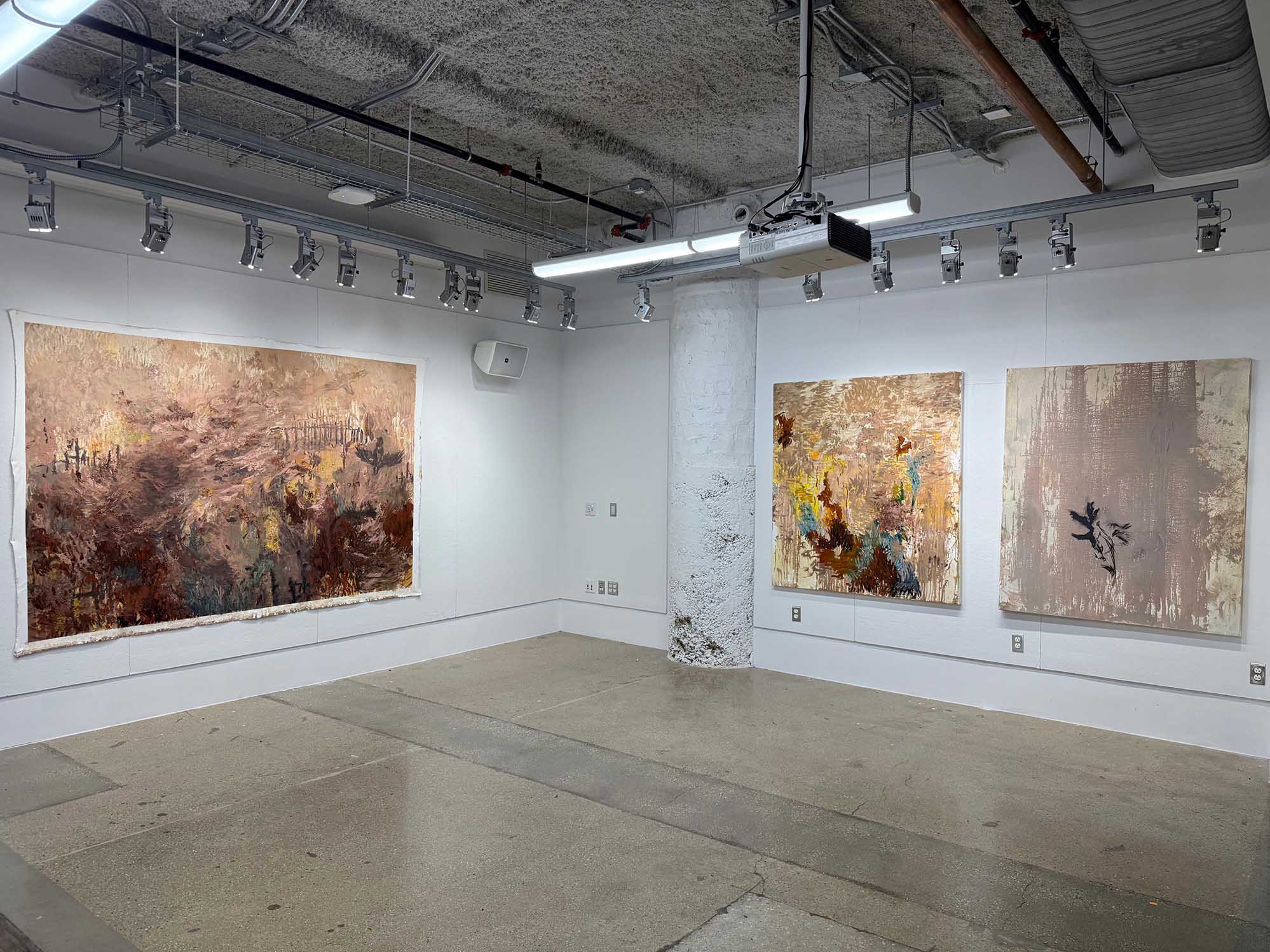
Chidinma Nnoli’s Artwork (Image Courtesy of Chidinma Nnoli)
Work, Vision & Practice
5. Question: Can you tell me about your current practice and any ongoing projects you’re excited about?
Answer: Right now, I’m pursuing my masters in painting at the School of the Art Institute of Chicago, and my practice is shifting, which I’m excited about. I’m asking lots of questions, and the answers have to happen in the studio. That’s why I’m so grateful for this time to be back in school and not necessarily think about exhibitions or perfection. I’m really excited to be doing this alongside a cohort of artists who arealso questioning things and experimenting in their own practices, and with professors and advisors who are there to help with these questions.
I also recently founded a non profit, Nchedo Arts Foundation. Nchedo means shelter in Igbo, and our major aim is to build an artist community grounded in radical care, respect, and agency. While the plan is to have multiple projects for artists, we’re starting with residencies. We currently have our first artist in residence, Blossom Oyeyipo, and we’re looking to host four residency cycles completely free for artists next year, with 3–4 artists per cycle. I’m super excited about this project because community is important to me, and Nigerian artists need more of this.
Reflection & Advice
6. Question: How do you stay inspired and grounded as a creative professional?
Answer: I keep myself grounded by looking to art history and at the artists who came before me. That’s how I know I can do this for the rest of my life. I watch a lot of art documentaries. I especially love watching and listening to older artists speak about their practice. There’s something so grounding about listening to people in their 60s, 70s, even 80s, talk about how they’ve sustained a practice for 30 or 40 years.
One of the artists I’m looking at right now is Maggie Hambling. I listened to her podcast recently, and I was just like, “I want to be like you when I grow up!”
Another person I’m obsessed with is Uche Okeke. He’s late now, and unfortunately, there wasn’t a lot of visual documentation of his practice, but he wrote a lot of essays, which were thankfully compiled by Iwalewa Books. Uche Okeke’s Art in Development: A Nigerian Perspective is basically my art bible. Documentation is so important. I wish we had more visual documentation on artists like him.
MOWAA Situation
7. Question: How did the recent events at MOWAA in Benin strike you as an artist and as someone rooted in this cultural landscape?
Answer: It was heartbreaking. While I was somewhat concerned about how this affects Nigeria’s reputation in the global art world, my loyalty will always be to artists, so I think first about how this will affect us. If you are not living in a city like Lagos, the average Nigerian art student could go three years in university or even graduate without having stepped foot in a gallery or museum. That is why the situation at MOWAA felt like such a loss for UNIBEN students.
I was really excited about MOWAA because it could be a space that students from UNIBEN, Auchi Poly, and DELSU could access. When I was in UNIBEN, everything I had, came from the community around me and whatever local art events I stumbled upon. I did not have access to a proper institution. The first time I visited a gallery was in my third year in university, and my first real museum visit was after I graduated, when I went to the Yemisi Shyllon Museum. Having these institutions as part of the educational system helps students see what is possible.
I do believe MOWAA will eventually open and that the situation will be resolved. What matters most to me is what students can gain from having access to that type of space. UNIBEN has produced so many incredible artists and amazing people, even beyond the arts, which is why access matters. A few of us have talked about returning to the university to start programs that connect the curriculum to contemporary conversations, but the truth is we do not really have time. We are still in the early stages of our practice, but the desire is there.
When MOWAA reopens, I really hope they make access free for UNIBEN students.
Being a student at the School of the Art Institute of Chicago, I’ve had free unlimited access to most museums here in Chicago just by showing my school ID, and honestly, it’s made such a difference. It changes how you learn, how often you show up, and how connected you feel to art history and contemporary practices. Something like that for UNIBEN students, unlimited access with a school ID, would be huge. It would feel like a real investment in students, not just as visitors, but as future artists and cultural workers.
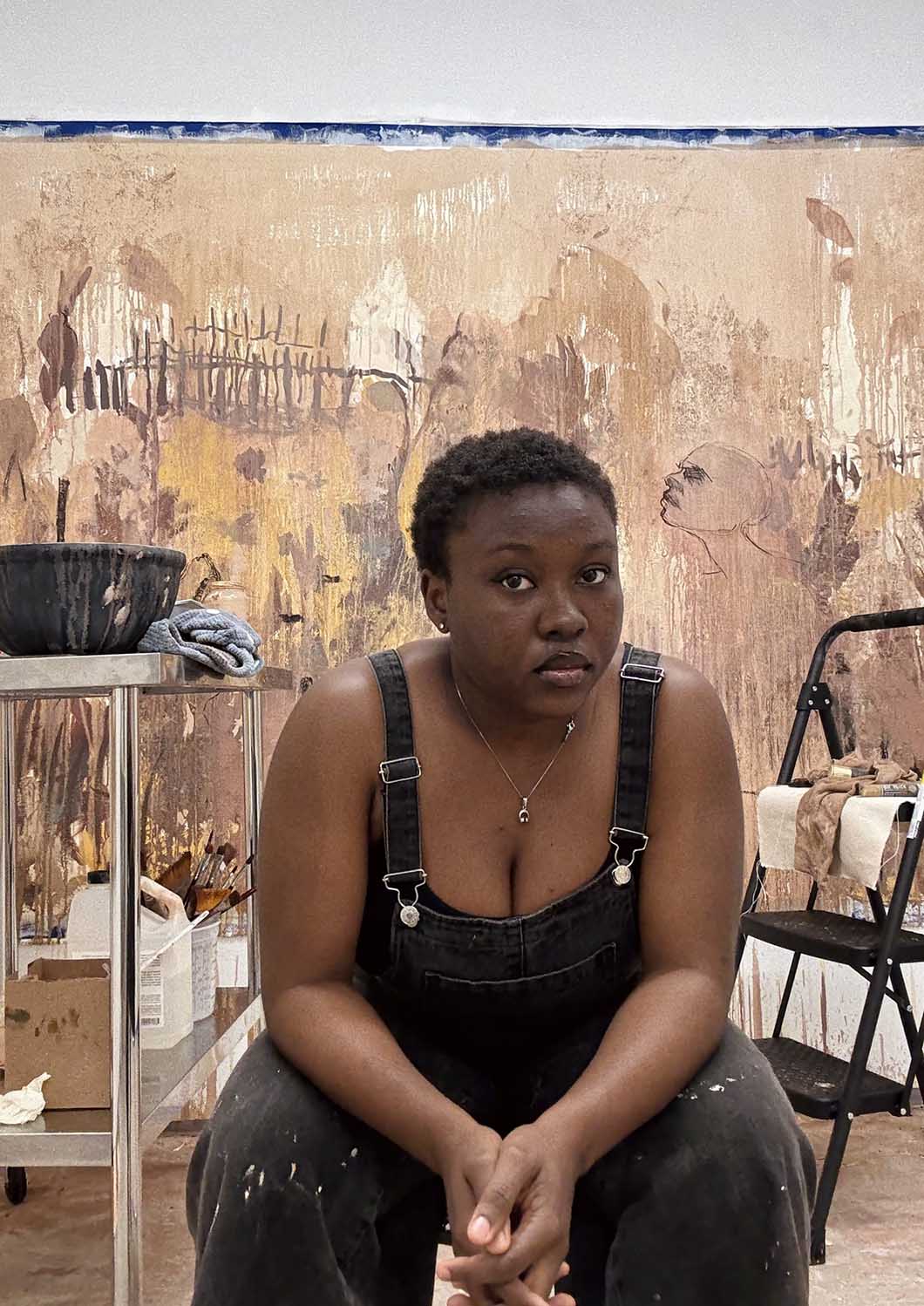
Photo of Chidinma Nnoli (Image Courtesy of Chidinma Nnoli)
Chidinma’s vision for “radical care” and institutional access reminds us that the future of art is a shared responsibility.
Next >>
To close out this series, we turn to Ayobami Ogungbe. While Chidinma builds shelters for the creators of tomorrow, Ayobami weaves photographs and textiles to reclaim the past, tracing the history of Badagry and the endurance of culture. Join us for our finale as we explore the intersection of the lens and the loom.