© Osengwa LLC. 2021 All Rights Reserved.
Jonathan Chinedu Chambalin’s story speaks to the profound influence of a multidisciplinary environment, where his unplanned placement in Theatre Arts at the University of Benin transformed his creative approach, teaching him that “preparedness,” “discipline,” and “collective responsibility” are as vital as talent. His practice is defined by a unique fusion of theatrical principles, such as scripting, lighting, and community engagement, with visual art and cultural production, allowing him to move fluidly between photography, kinetic sculpture, and performance. Grounded in the philosophy that “many trees make a forest,” Chambalin prioritizes tangible societal impact over individual acclaim, using his art to address political and environmental issues like flooding in Lagos through innovative materials like jute stems. Ultimately, his journey from a shy student selling fish to support himself to an artist involved in beautiful projects, like the Re-entanglement project, illustrates how personal resilience and a deep commitment to community can forge a path for meaningful, “realistic-use” artistic expression.
Jonathan Chambalin
Here, I sat down with Jonathan Chambalin to talk about his work.
The UNIBEN Experience & Influence
1. Question: How did your time in the University of Benin influence your personal and artistic growth, as well as your creative process?
Answer: My time at UNIBEN really shaped me as a person in every sense. It amplified qualities that were already inside me but dormant: things like community building and this sense of boundless creation, where you learn to create from the very least. I didn’t need anything special happening around me to make work; UNIBEN gave me a kind of natural creative flow. It came from observing people, being present with them, and watching how original they were with themselves.
When I got into university, I actually wanted to study International Studies and Diplomacy, but I was placed in Theatre Arts instead. I told myself I would change to my preferred course in Second Year once I could pay for the change. But during that First Year in Theatre Arts, I realized how much I genuinely loved it because it amplified who I really was.
Theatre Arts demanded a lot of discipline. Sometimes we had to wake up at 4 a.m., just to be in the rehearsal hall by 5 a.m., because the lecturers were already there waiting. You’d think you arrived early, and then the hall would quietly fill up and you’d realize your lecturer had been sitting behind you the whole time. Our days started with physical warm-ups, communal exercises, voice training, breathing, pronunciation, and annunciation, so much went into preparation before anything creative even began.
All of that taught me how essential preparedness is, how timeliness and discipline directly shape the outcome of any production. And I see that in my work now. Whether I’m shooting or working on a project, I prefer to arrive at least 30 minutes to an hour early so I can understand the space and plan for the day.
So the entire structure and rhythm of Theatre Arts at UNIBEN really formed me, not just as an artist, but in every area of my life.
2. Question: During your time at UNIBEN, were there any experiences, professors, or mentors who shaped your creativity or perspective, and are there classmates you still collaborate with or who have influenced your work and creative process? Additionally, are there any traditions or aspects of Benin’s culture and artistry that continue to shape your practice today?
Answer: The creative environment, the people, the culture, played a huge role in shaping me. Theatre Arts is a department that can turn you into anyone. One day, you’re acting as a pre-colonial white soldier, with full white face , Queen’s English, and perfected mannerisms. The next day, you’re Azagidi, a fierce folklore warrior, which I played, and honestly, I killed that role. I can even get the old tapes if needed.
That range teaches adaptability. Theatre Arts constantly pushes you into different worlds. We had courses that stretched us mentally and creatively: community theatre, puppetry, music, directing, set design, theatre management, and so many others. All of those components shape you.
Community Theatre, especially, prepared me for the work I do now as a cultural producer. It wasn’t just theory. We had to go into real communities, teach dances, organize productions, split into teams, and then present the work publicly. Your lecturers, your entire department, and the community all came. **And you were graded based on your real impact. That type of training makes you deeply community-minded and adaptable.**Music wasn’t just taught as a course; we learned its function in theatre. How it supports storytelling, how it cues scenes, how it shapes mood. We formed groups, and in Theatre Arts, if one person failed, the whole group failed. So we learned to think communally, not individually. That mindset still affects how I work today.
There was also specialization: dance, music/dance combined, theatre production, TV and new media. Puppet theatre too, where we created puppets out of socks, fabric, anything. Theatre Arts prepares you for every corner of the creative world, and even for life. Outside lectures, I was very drawn to the Fine and Applied Arts department. People even assumed I was a student there because I was always around them and in the studio at some point I started photographing them as well. That early exposure opened my eyes to visual art.
School also teaches you survival. I photographed in a nightclub while in university to support myself. That’s how I met OG’s like Mo Fame, who is basically the bloodstream of the Southern entertainment scene: radio, showbiz, music artistry and the clubs. He and others created very realistic-use cases for the arts. That’s why many artists who come out of UNIBEN already have real-life experience: doing radio runs, performing on campus, and engaging with actual audiences. Fame maker also played a big part in unifying mainstream with the South-South culture even while he was a university student.
Ekenhuan Campus had one of the hardest audiences to impress. If you weren’t good, the crowd would hit their tables and chant “Milo, Milo” until you left the stage. But the moment you redeemed yourself, they embraced you. They loved a good redemption story. If you were a darling of the Ekenhuan crowd, you could perform anywhere.
We were taught design principles of lighting, studio management, theatre management, ushering, crowd coordination, and many others. Because of that, many students went on to organize real-world shows. One example is Moses Akerele, who organized Miss UNIBEN and Campus Prodigy. He later acted in MTV Shuga and has a bustling career.
The ecosystem around us was strong. Rhythm FM was another institution that contributed to our growth. Andy Bello hired fresh, creative minds, which is how I met people like Sato EDK, who went on to start Sound City FM and now works at radio JUSMEN. My friend Chika Agu, who was with KU FM, now works at Audiomack. Even people from Ugbowo and other schools gravitated toward Ekenhuan because it was the center of creativity.
There was a real-life energy transfer from campus performances to radio, music, shows, awards. And by God’s grace, back then, I was one of the names you called if you needed photography. My introduction to art also came through theatre. During productions, especially in our early years, we collaborated with Fine and Applied Arts students. Pre-production involved all teams: lighting, costumes, directing, set design, theatre management, acting, and orchestra. We had to cost everything: renting lights, creating costumes, powering the stage. Rehearsals were intense.
One of the greatest directors I ever worked with is Dr. Israel Wekpe. He’s the embodiment of theatre from a global view. He pushed boundaries, like building actual water bodies on stage so performers could “swim” during a scene. Having him as my first-year lecturer was a privilege. Under him, I played Azagidi, one of my most memorable roles.
We performed two plays that year: Ovoramwen N’ogbaisi and Azagidi, the story of a powerful warrior blessed by the Olokun (god of the seas), to marry Igbahon but faces tragedy through betrayal, vengeance, and loss. It was an epic-tragedy blend and my real entry into acting.On production day, everything moved to the Green Room: makeup, costumes, stage managers calling actors, checking blocking, voice range, timing. After the show came the Viva, the “judgment day,” where the Head of Department and theatre personnels graded every part of the production. They were strict, very strict. But it taught us accountability and collective responsibility.
Now to the culture: the first major way we connected to Benin culture was through their songs. I still remember many of them. The songs were taught to everyone, and later the orchestra specialized in them. Songs served as cues: dirges for tragic scenes, celebratory songs for victory, etc. Benin culture is very narrative, so anyone who studies Theatre Arts there knows about the Benin invasion, Oba Ovoramwen, the formation of the kingdom, you can’t escape that knowledge.
Dance was also major. I danced Kaleta, a masquerade-style character dance meant to mimic a bird, with formations: straight lines, slants and circles. At one point, I was assigned to carry another dancer while performing elaborate footwork.
After the First Year, we studied other cultures. I learned Swange, a Tiv cultural dance. For Community Theatre, we traveled to different states, found cultural troupes, brought instructors back, housed them, learned songs and dances for weeks, and then recreated them originally. Our grading depended on cultural accuracy. We also studied costume design, costume function, cultural symbolism, and more.
As I noted earlier, I supported myself in school. In addition to nightclub photography, Sold original South Africa wood pine wood, with a friend. We supplied various people, including lecturers in the Fine Arts department.
So, that’s the kind of diverse, intense and culturally grounded experience you get studying Theatre Arts at Ekenhuan Campus.
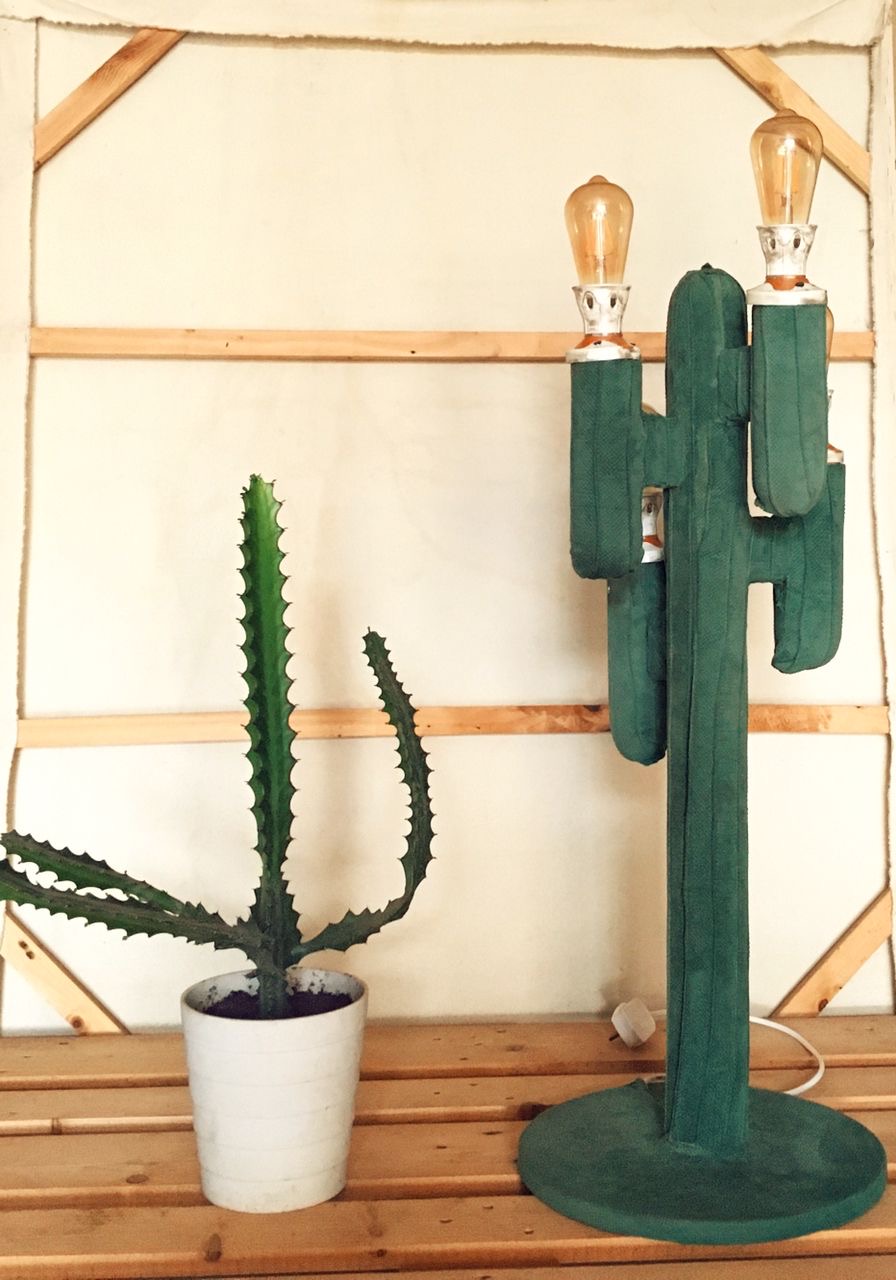
Jonathan Chambalin’s Artwork (Image Courtesy of Jonathan Chambalin)
Background & Education
3. Question: What year did you graduate from UNIBEN, and what motivated you to choose the University of Benin for your studies?
Answer: I got into the University of Benin in 2013, and I graduated in 2017. If you add the strike that happened around that period, then early 2018 is when everything fully wrapped up. But officially, 2017 was my graduation year, with the strike stretching things slightly into 2018.
Choosing UNIBEN was deeply connected to my Dad. Before he passed, we used to take trips together, and one of our really important trips was to Benin. On that trip, he told me something I never forgot. He told me that anytime I needed anything, my uncle, who was a professor in the Faculty of Engineering at the time, would be there for me. He has retired now, but back then, knowing he was in Benin gave me a sense of security.
I originally wanted to study International Studies and Diplomacy, and UNIBEN was my top choice. I actually considered another university at first, the University of Nigeria, Nsukka; but after a few trails it was UNIBEN I eventually attended.
My family also genuinely loved Benin as a city. So when the admission came and I was offered Theatre Arts, I just went with it and ended up falling completely in love with the course.
Creative Journey & Development
4. Question: You speak with so much passion. When did this passion start, and could you walk me through this process?
Answer: To start with, I was always the shy, quiet type of person. Growing up, people knew me as a witty and intelligent person, but I was also very reserved. But being shy didn’t really matter in Theatre Arts because there’s a course called Voice and Speech. In that course, they teach you howto pronounce, enunciate, and project your voice to as far as the back of the hall while speaking softly.
I’d say one of the biggest things that made me confident speaking was what I learned in that course: how to speak to an audience.
Also, a lot of people didn’t go on stage because they were shy. But if your character fits the script, and your aura fits the role, you’re going to play it. It made the whole thing suspenseful; you never knew who would be on stage next because the director chose who fit each role best.
Because of this, we were always pushed to be public-facing. Music exams, theatre exams, puppet theatre exams and dance exams, everything involved performing in front of an audience. So, you had to learn how to communicate with lots of people. My Dad also helped me a lot with my shyness.
Art started for me long ago, when I was scribbling with coloured markers and crayons on pages. My Mum would see my drawings and say, “Why are you drawing all these devilish things?”while my Dad would just laugh and brush it off. My Mum was very strict about that, insisting that it shouldn’t be encouraged, but my Dad found ways to support me. He’d buy graph notebooks or handwriting books, and I’d paint and draw as much as I wanted. According to her, he was spoiling me but art has always been inside me.
Photography has also always been a part of me. I was known for it in school. But my passion really grew from within myself.
My passion for speaking also emerged when I was selling barbecue fish to support myself in school. To support yourself in school, you have to raise money. I sold very close to Alaba International Market, selling barbecue fish, for a while. I was one of the best salespeople there, even though there were five other competitors. That experience also gave me confidence in speaking, convincing, and talking with people.
The moment I got into university, it all balanced out and added up. Everyone liked me, and even some who didn’t started liking me because everyone liked me. It takes a lot to sell to many people, and that experience built my confidence. Going into Theatre Arts at the University of Benin, I found a realistic-use case for those skills.
5. Question: How did you find your first creative opportunities after school?
Answer: When people say, “Oh, nobody told us,” well, I’m going to tell graduates now: the first year after you graduate is usually hell. If I could do anything better, it would be this: knowing that in Theatre Arts there isn’t a compulsory internship, students should take the initiative to seek real-life creative experiences and build a creative portfolio beyond school activities.
Photography really helped me do this.
After school, I was depressed for about a year. I stayed at my friend Leroy Uwaifo’s house the whole time while I was figuring out my life. One day, I wanted to apply for the Welcome Prize, so I thought, “You know what? I’ll go and photograph in Benin in ring road, to document the crisis of the mentally ill roaming the city to cause conversation about welfare of the mentally ill in Benin where I lived then and submit those photos for the Welcome Prize.
While I went to photograph them, a few of them chased me, and while I was catching my breath, I found out one of my friends who worked at the Edo Global Center. I went to pay him a visit, and by coincidence, Professor John Basu from the University of London and the Cambridge Museum was organizing a seminar for artists to join the Re-entanglement project. I showed up just in time and told him, “You know what? I want to do this. I can do this.” I got added to the Re-entanglement project, and that’s how my art career started, by going to photograph people with mental illness on Ring Road in Benin City.
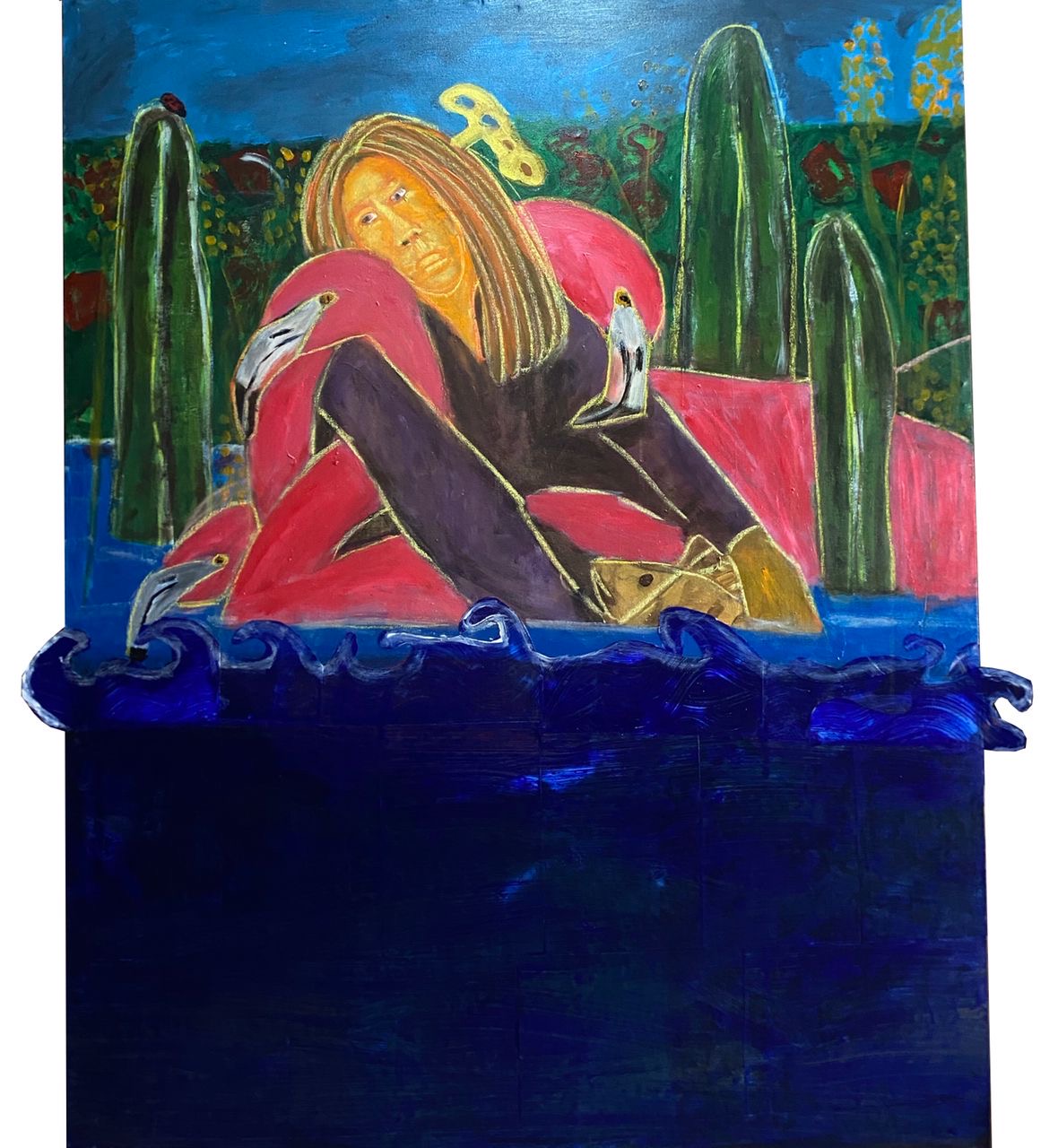
Jonathan Chambalin’s Artwork (Image Courtesy of Jonathan Chambalin)
Work, Vision & Practice
6. Question: Can you tell me about your current practice and any ongoing projects you’re excited about?
Answer: My current practice has been coming together under one overarching theme: societal awareness. I’ve come to accept that my work is quite political, especially around wellness and the state of the world. I realize that my work is confrontational in nature. Right now, I’m taking a strong political stance focused on the environment: how we protect it and relate to it. I work with Kinetic Sculpture, which is like a kind of puppet theater. When I studied Theatre Arts at the University of Benin, we were taught to create symbolic characters using various forms; sometimes controlled by hands and sometimes by strings. My earlier work included a Kinetic Sculpture that was string-based. Now, I’m moving towards Rotational Sculptures made primarily from jute stems.
Jute is a tough, fibrous material we often use for things like bags and woven crafts. It’s a medium I use to craft a face on a circular motion device with two rotational plates. As the sculpture turns, it reveals how people tend to ignore flooding, especially in Lagos. We talk about flooding all the time, but once the hot season comes, we stop thinking about it until the next flood hits, and then we start complaining all over again. The work highlights how we’re wired to avoid anticipating recurring problems and solving them proactively.
Alongside this, I’ve been drawing and painting cactuses. The cactus symbolizes survival, it thrives in dry, harsh conditions and can adapt to various environments. This speaks to humanity’s need to adapt if we are to address environmental challenges effectively.
7. Question: How do you define success or fulfillment in your field?
Answer: For me, it has always been about impact: how you can realistically affect people’s lives. You often hear artists say they want their work to change the world, but I always wonder: “How? What does that really mean?”
When you look at what I’ve done, it’s always been about practical, tangible impact. For example, I invented a type of alternative wood made from natural ingredients, etc. My drive for impact goes way back. In my Senior Secondary School days, I participated in the Obasanjo Essay Competition in Lagos State. I wrote about the Ogoni people and the pollution of their land and water. Even then, I was curious about solutions. I spoke to science teachers about how we could help clean the Ogoni land. They told me about a process where microorganism culture is introduced to polluted sites to naturally extract crude oil and clean the environment. That fascinated me. I thought if we could develop advanced ways to amplify this natural process, it would make a huge difference.
Since then, my focus has been on how technology can help care for people and the environment. That idea has never left me. I see myself as an innovator, and for me, art is the path through which I can create meaningful change. I want my work to benefit people and leave a positive impact on the world.
Reflection & Advice
8. Question: What advice would you give to current students who want to follow a creative path?
Answer: The advice I would give them is simple, and it’s actually my motto in life: Many trees make a forest. Being a singular person makes you powerful and self-sufficient, but it doesn’t guarantee longevity or community. Over time, that isolation shows.
When I was in school, one thing I made sure of was to be helpful to everyone. I intentionally involved myself in creative projects and built genuine connections. For example, I had this group chat where every morning, I would send encouraging messages to nearly 200 people on campus. These weren’t just random messages, they were words of encouragement, motivation, and support. Some days, I’d send over 300 messages to friends from different levels, from 100 level to 400 level. People would often tell me, “Wow, how do you keep sending these uplifting messages? They really make my day.” And that connection really endeared me to the community.
Because of that, whenever I needed support, people were always there for me. I still live by this today.
So, my advice to students is this: involve yourself. Your value as a person is more important than money. Be helpful. Learn from the experiences and people around you. And if you don’t know exactly what you want yet, that’s okay: keep moving, keep exploring, and trust that you’ll find your path along the way.
9. Question: How do you stay inspired and grounded as a creative professional?
Answer: Let me take you through this. In the art scene, some artists paint the same thing over and over again. They stick to one subject for a long time. But that’s not how I work. I don’t continually paint one thing because my process is very personal and fluid. I see my work as a script, a play’s script. Just like in theatre arts, where you create a script with characters, a location, and context, I approach my art the same way. When I create, I give it a location, an emotional or political question, and an environment that fits. I think about what kind of clothing or lighting it needs, everything that sets the right context to express the message.
So, my work changes according to what I’m thinking about or curious about. The environment and materials all shift depending on the story I want to tell. That’s what keeps my creative river flowing. I don’t get creative blocks because my mind, thanks to my theatre background, is always searching for a play script; a story, from life and from where I exist as a person.
There’s a constant awareness of who I am at every moment, and I keep evolving through my work.
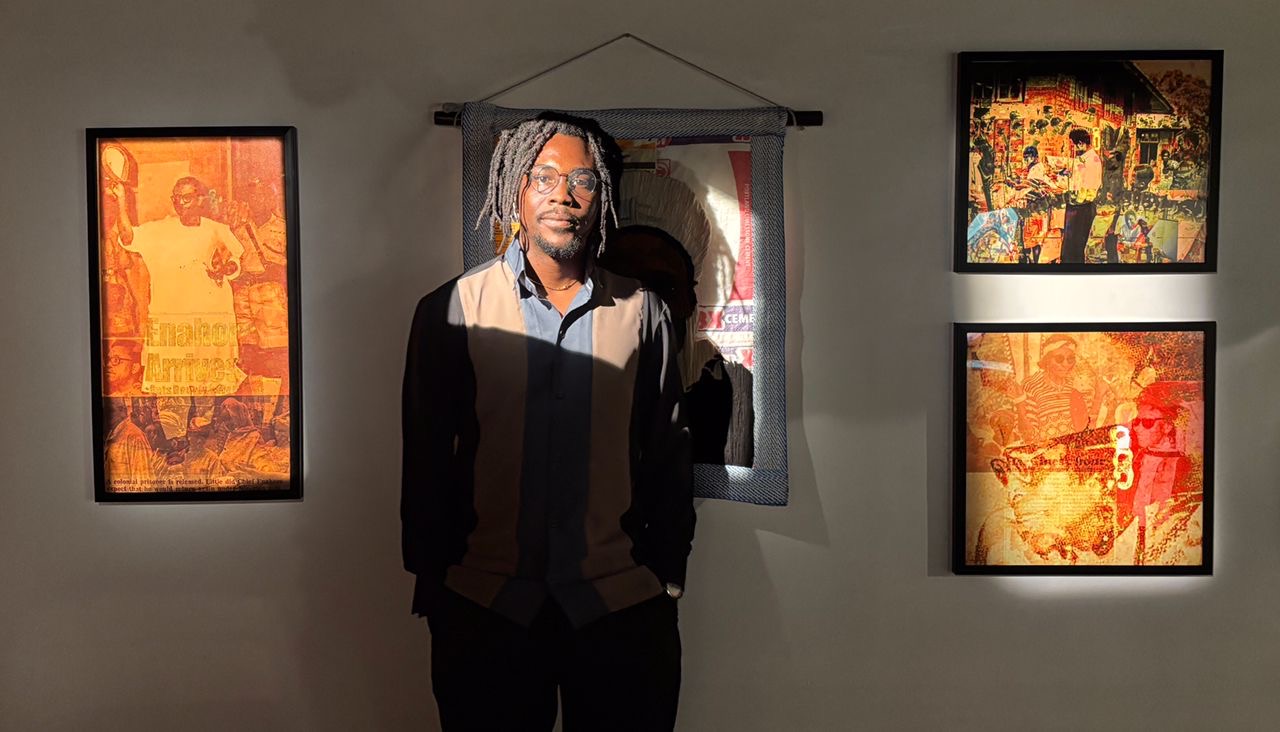
A Photo of Jonathan Chambalin (Image Courtesy of Jonathan Chambalin)
Jonathan Chambalin’s story is a testament to the power of communal theatre and “realistic-use” art, our next feature shifts the focus from the external landscape to the internal mind.